Ava (mother in Mari language)
Mlande Ava (Mlande — earth, Ava — mother)
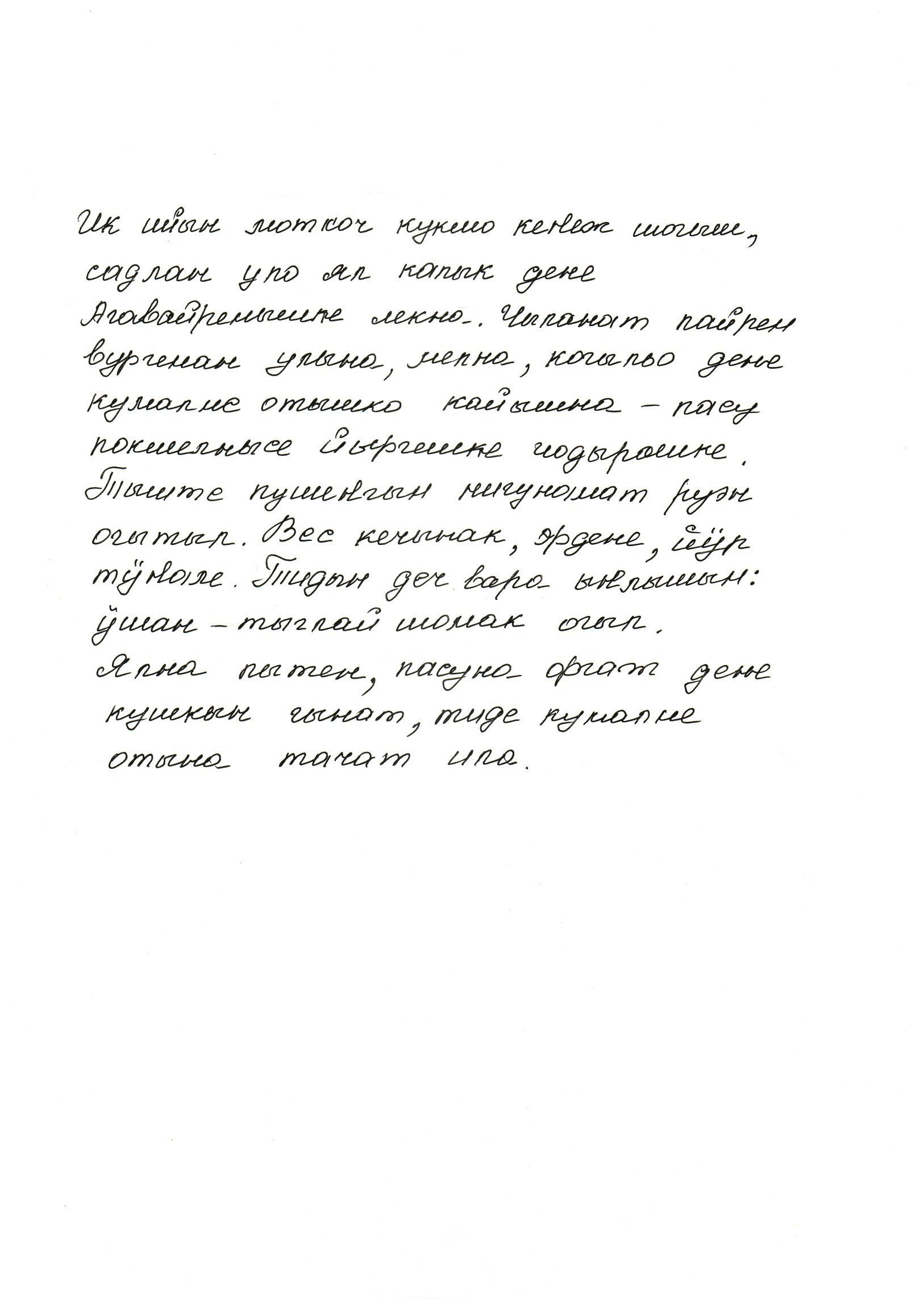
I was born in a small village called U-Ilem. It is a quiet, secluded place, as if hidden from the rest of the world. The nature there is special: dense forests, wide fields, and water from the spring that is so delicious and clean… It flows right from under the rocks. I still remember how it cooled my palms.
Not far from the village lay Lake Akhmat. The men fished there, and craftsmen made sturdy, reliable boats from trees.
Every family had five or six children back then, it was fun and noisy. The adults worked on the farm, and we children helped out in the summer: we carried water from the spring, mowed hay, and chopped wood.
In the evenings, when the heat subsided, the whole village seemed to come alive. We gathered on the soccer field: some played volleyball, some played lapta, and the girls played jump rope. Laughter rang out across the village… Those were simple, good times.
My mother was the last resident of the village. Now she is gone too… But the spring still flows as it did then. It never stops.
Tul Ava (Tul — fire, Ava — mother)
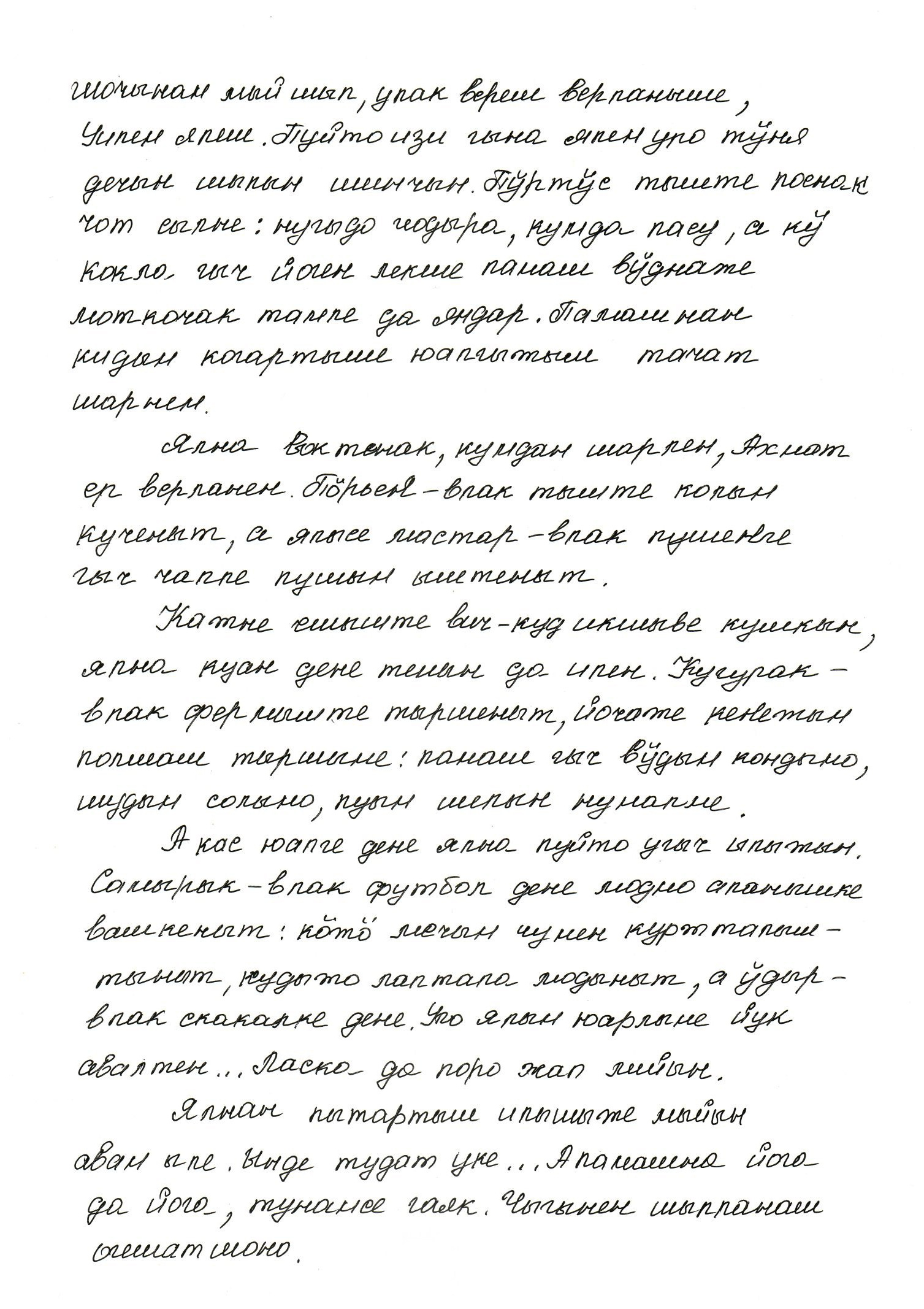
When the field work was finished, my parents always went to the sacred mountain “Kuryk” to give thanks for the harvest. They took a goose and food with them. In the grove, they cooked goose soup and prayed for the health of their children and the well-being of their family. After the ritual, they brought the soup home and shared it with their loved ones. The leftovers could not be thrown away or given to the animals.
After my parents died, I continued the tradition. I go to give thanks for everything we have. I pray for the health of my children and grandchildren, for the hearth to remain alive.
Three loaves of bread, three candles, and coins are brought to the mountain. Candles, bread, and coins are symbols of gratitude and connection with the gods. Then they go down to the spring, throw a coin into the water, and take it home.
There, in the grove, grows a paired tree. They say that those who cannot find a partner come there, hang a towel on a branch, and whisper their wish.
Vud Ava (Vud — water, Ava — mother)
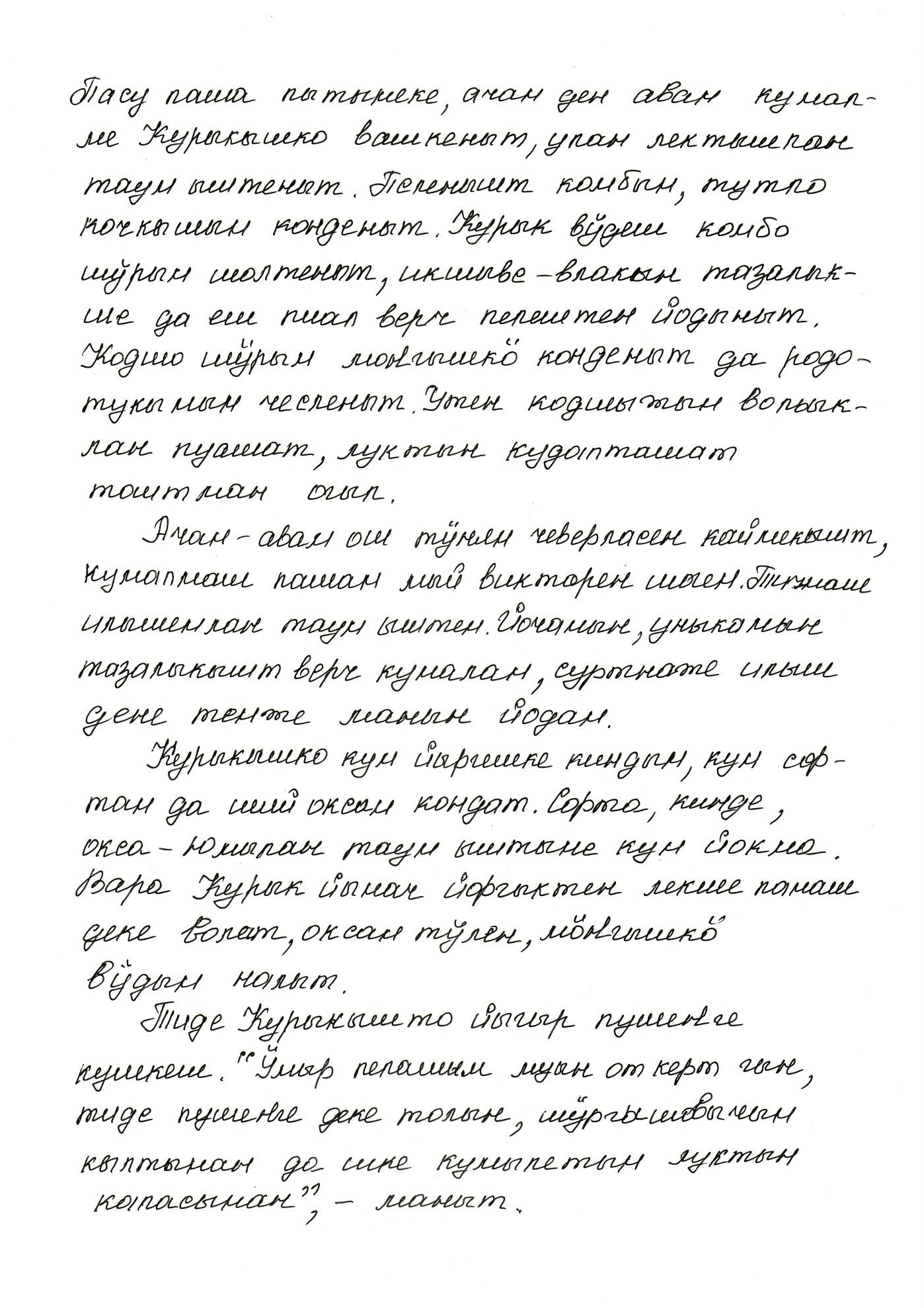
Our village had a spring and a communal well. The spring was ice cold and was used only for drinking and cooking. We would climb down a steep path with a yoke, which was hard work, but the water was refreshing. There was a special place near the spring where you could do your washing.
The well was closer to the house, and water was taken from it to water the livestock and the vegetable garden. On weekends, when everyone heated the bathhouse, there was not enough water and the well ran dry. Now no one draws water from it, and the log cabin has rotted away.
Mardej Ava (Mardej — wind, Ava — mother)
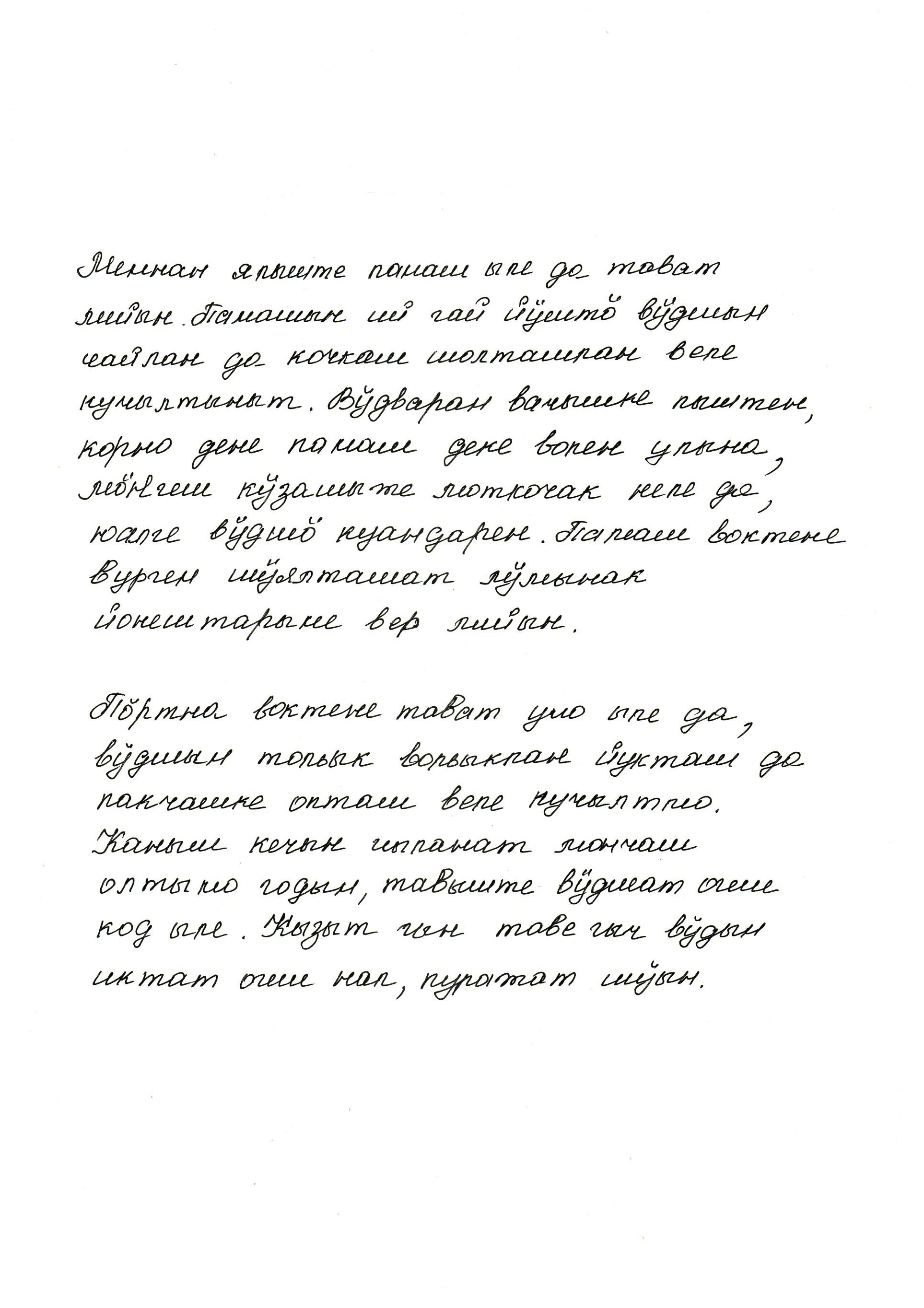
Once upon a time, there was a severe drought in the summer. Then the whole village gathered for Agavirem (a plowing festival). Dressed in our festive clothes and carrying pancakes and pies, we walked to this sacred place — a circular forest in the middle of a field. Trees had never been cut down there. The next morning, it rained. After that, I understood that faith is not just words. This sacred place is still alive, even though the village has been abandoned and the fields have become overgrown.